
THE HACKATHON
In collaboration with the National Organization for Rare Disorders (NORD®), Harvard Undergraduate Rare Diseases (HURD) is excited to host HackRare, a hackathon focused on rare diseases.
Held in honor of Rare Disease Day® (February 28), HackRare 2027 will take place over the weekend of February 27 - February 28, 2027 at Harvard’s Student Organization Center at Hilles (SOCH) in Cambridge, MA. Our goal is to bring together brilliant minds to explore computational solutions for rare diseases, leveraging the power of open science and genomic data.
Join us to deepen understanding and drive meaningful progress in improving the lives of those affected by rare diseases!
Registration for HackRare 2027 will open in January.

OUR PROGRAM
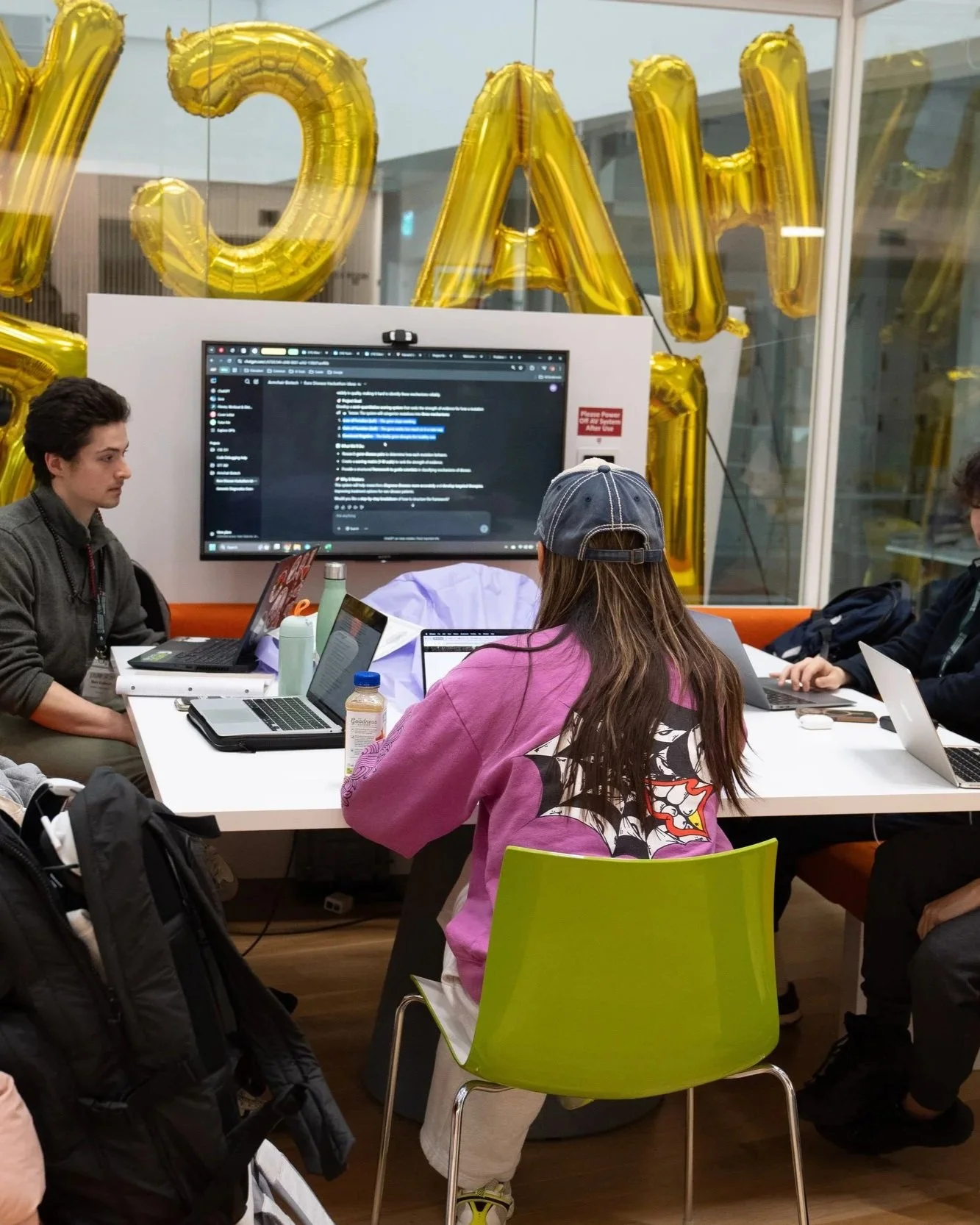
At the hackathon, post-secondary school students will have the opportunity to interact with inspiring patients, caregivers, physicians, and scientists involved in rare disease areas. Hackathon participants will be challenged to produce solutions of direct benefit to patients in these communities, with the eventual goal of scaling their solutions to better support rare disease patients.
WORK SESSIONS FOR PROBLEM SOLVING
Dedicated collaborative sessions where participants have the opportunity to tackle challenges and develop impactful solutions.
MENTOR OFFICE HOURS
One-on-one or small group mentoring opportunities to seek expert advice, refine ideas, and troubleshoot roadblocks in real time.
PATIENT & CAREGIVER LIGHTNING TALKS
Short, powerful talks highlighting personal experiences and challenges, providing a human perspective on the problems participants are aiming to solve.
KEYNOTE SPEAKER SESSIONS
Inspiring and insightful presentations from leaders in the field of rare disease and genomic medicine, offering participants cutting-edge knowledge and future trends.
SOCIALS & NETWORKING HOURS
Informal gatherings designed to foster connections among participants, mentors, speakers, and organizers, creating opportunities for community building.
FINAL PITCH PRESENTATIONS
Participants showcase their innovative solutions to a panel of renowned experts in rare diseases, receiving recognition for their work.
MEALS & SNACKS
Participants will be provided with three meals a day—breakfast, lunch, and dinner—in addition to snacks.
AWARD CEREMONY
A celebratory conclusion, honoring the most impactful and creative solutions with awards and recognition.
2026 PARTICIPANT INFO
WHO
Teams of 2-5 undergraduate or graduate students (with valid @_.edu addresses), irrespective of geographical location.
Participants may form teams on their own or find teammates through our event Slack channel.
WHAT
An opportunity to collaborate in interdisciplinary teams to engage with challenges faced by the rare disease community. Complemented by speakers highlighting patient perspectives and current struggles and innovations in healthcare, technology, and advocacy for rare diseases, participants will develop impactful deliverables such as data reports, business proposals, computational tools, and web or mobile applications. Coding experience is not required for participation.
Participants will register for one of three tracks aligned with the journey of a rare disease patient: Genomic Diagnostics, Therapeutic Targets, or Symptom Management. For each track, teams may choose to work within the provided focused problem statements or pursue an open-ended project that aligns with the broader goals of the track. Physicians, statisticians, biomedical scientists, and other experts will host office hours to assist teams with inquiries about rare diseases or computational methods.
Each team will submit a slide deck and a GitHub repository and deliver a three-minute live presentation to a panel of judges composed of physicians, scientists, parents of patients with rare diseases, and industry representatives. Each presentation will be followed by a two-minute Q&A with the judges. All coded project components should include a functional demo, either live or recorded. Projects will be evaluated based on relevance, impact, novelty, feasibility, scalability, and presentation quality. One team will be selected as the winner in each track and will receive a cash prize of $2,000.

WHEN
Problem statements will be released on Friday, February 27, 2026.
In-person, hackathon programming runs from Saturday, February 28, 2026 at 9 AM to Sunday, March 1, 2026 at 7 PM EST.
Meals will be provided for participants.
WHERE
Harvard University’s Student Organization Center at Hilles in Cambridge, MA
59 Shepard St, Cambridge, MA 02138
Participants must attend the hackathon in-person and are responsible for acquiring their own transportation. The venue will be open overnight.
Students may apply for travel funding through our NORD Scholars Program.
WHY
To advance practical, meaningful, and enduring change to serve patients with rare diseases. Our goal is to provide an environment for effective collaboration to produce solutions of direct benefit to patients in the rare disease community.
HOW
Registration is free of charge and first-come, first-served, with limited capacity for ~60 teams. Participant eligibility will be reviewed. Closer to the event, registered participants will be asked to confirm their attendance.
Registration for HackRare 2026 is now closed.
If you registered, please check your email for attendance confirmation details and important next steps.
Research Integrity: All research norms must be strictly followed. Any previously published research used in final deliverables must be appropriately cited. Participants are welcome to use any public datasets and we will give directions to useful ones. Personally solicited or yet-to-be-published private data not provided by Hackathon organizers should not be used or presented at any point in the deliverable.
TRACKS
During registration, participants will select one of three tracks, each focusing on a different aspect of the journey of patients with rare diseases. For each track, teams may choose to work within the provided focused problem statements or pursue an open-ended project that aligns with the broader goals of the track. Winners will be determined for each track based on the projects developed.
GENOMIC DIAGNOSTICS
The Genomic Diagnostics track focuses on the development of diagnostic tools and technologies that utilize genomic information to identify and understand rare diseases. Participants are tasked with leveraging advancements in genomics, such as next-generation sequencing and bioinformatics, to improve the accuracy, speed, and accessibility of diagnosing rare genetic disorders.
SYMPTOM MANAGEMENT
The Symptom Management track addresses the development of strategies and tools to manage the symptoms of rare diseases, enhancing quality of life for patients. It includes creating products that help mitigate or ameliorate symptoms when a cure or direct treatment is not currently available.
THERAPEUTIC TARGETS
The Therapeutic Targets track is centered around the discovery, development, and optimization of treatment options for treating the underlying causes of rare diseases. Possible approaches include gene therapy, small molecule drugs, biologics, or personalized medicine strategies tailored to genetic profiles.